Sashiko - Yokogushi Stitch
Hitomezashi stitch patterns are made up of small straight lined stitches that build the pattern up in layers. These are good patterns for reinforcing fabrics- areas like knees and elbows on clothing. Hitomezashi itself means ‘one stitch’ and mainly follows a grid to maintain the geometry and the size of the stitches.
Yokogushi is the starting point most Hitomezashi patterns, meaning Horizontal rows.
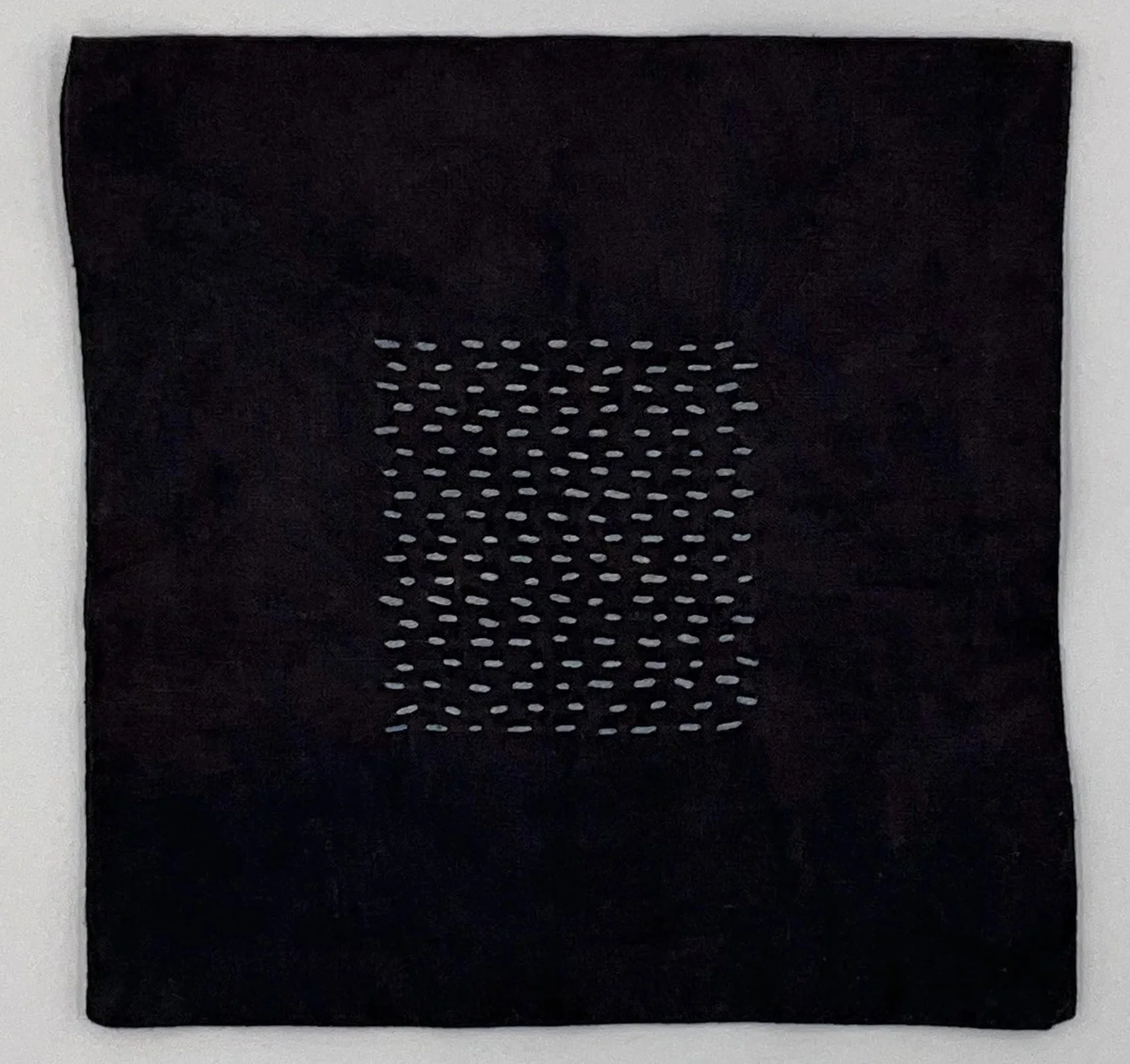
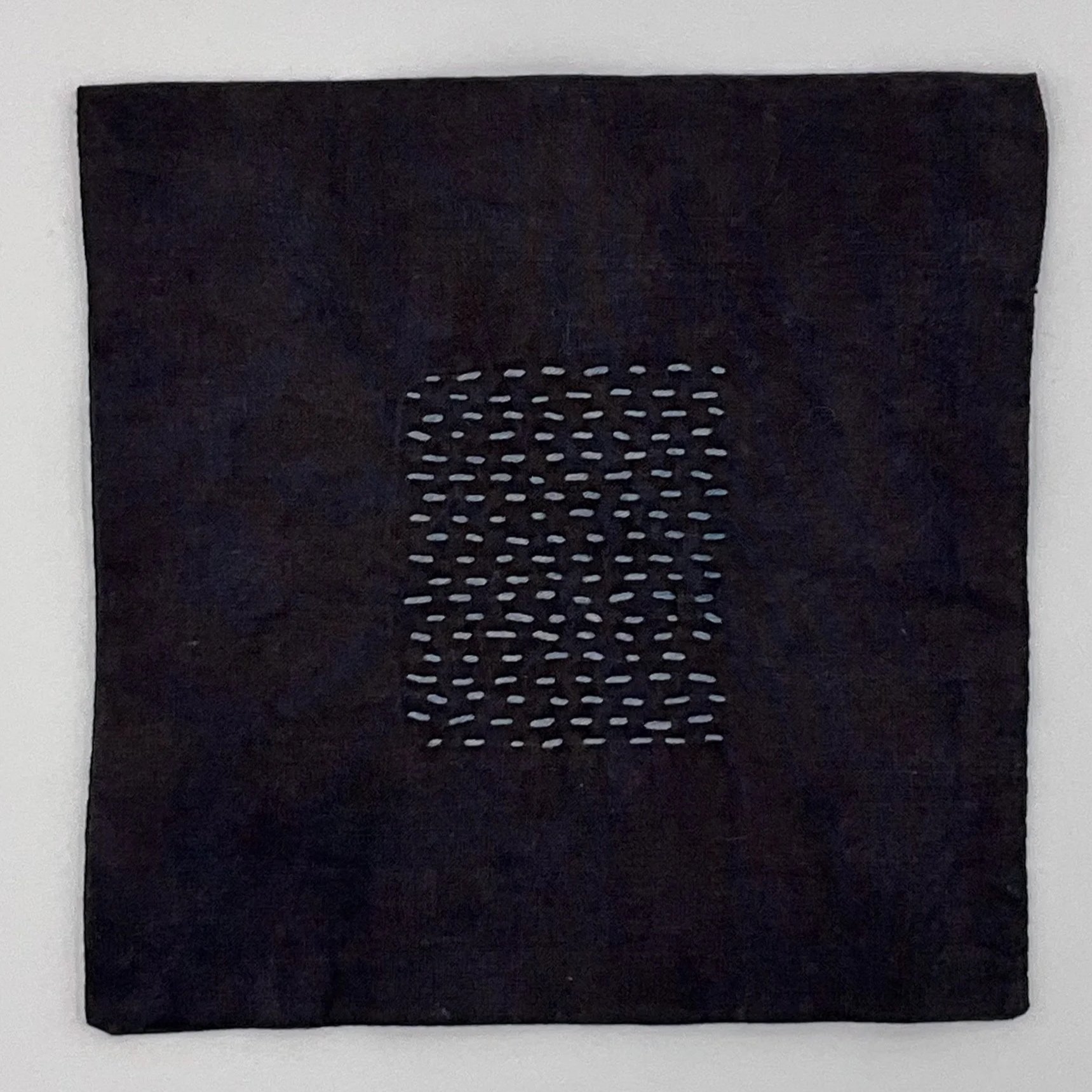
The piece that I worked on used a very small scaled grid. This size of grid was more difficult to maneuver than I anticipated, and was obviously too small for almost any other Hitomezashi pattern that would involve multiple laters and weaving. It also made stitching difficult as the fabric bulked and tightened when the thread was added. Management of thread tension is key here, if you allow the fabric to pucker and do not leave loose loops when turning to the next line, it becomes difficult to lie the completed pattern flat. It is a good strong method for reinforcement using just a Yokogushi stitch, but for any other pattern I now move up to a 1/4” grid as my smallest size.
The textile I used was a cotton fabric that had been dyed numerous times to achieve a dark color. Creating a black in natural dyeing is difficult and involved several layered dyeing to achieve. This fabric started off with a cochineal bath, followed by an indigo dip, an iron dip, and finally was dyed with logwood. I used white thread for the pattern, which was dyed with the fabric for the last logwood bath. Since the thread was not pretreated with a tannin or a mordant, it barely picked up any color.
Another aspect of Sashiko to notice and embrace is the Wabi-sabi, finding the beauty in the imperfections of your work. The goal in Hitomezashi is to maintain straight and even lines, but as this is a handmade process there will be irregularities. It is more noticeable in a simple pattern like Yokogushi, but when a pattern is layered and complex the imperfections become less noticeable. I enjoy these moments of crooked lines, or accidents that are not seen until you have moved beyond them. I see them as marks of learning, happy accidents that remind us to appreciate the naturalness of life.