Sashiko - Takenhanezashi Stitch
Moving forward again from Dan Tsunagi, the Takenhanezashi stitch is an easy variation that adds a little more pattern and an opportunity for an additional color. The name breaks down to Take (竹): Bamboo, Hane (跳ね): Jump, splash, or spring, and Zashi (刺し): Stitching (from the verb sasu, to stitch/pierce).
I love the simple complexity of the pattern, and it’s one that can be accomplished quickly once you have the rhythm of the stitching.
For the textile, I used a piece of cotton with Cochineal dyed using the water from my well. On the front side, it is just the Cochineal after dying, and the back has the same piece shifted using an iron over dye. Cochineal is very much influenced by the water used, and I have found that the natural minerals in the water from my well give me a beautiful strong vibrant pink color, as opposed to a more neutral water like distilled water which will lean more towards a purple color. These are interesting things to learn about your dye material, especially when you are attempting to recreate a color you achieved previously. Part of the fun of natural dyeing is the uncontrollable nature of the process, but I’ve spent time studying how changing water and material amounts can change the end result.
For the thread, I used a variegated blue from Olympus (#151). the thread is an Egyptian cotton, and I find this quality to be very strong and does not break or unravel. I used this color for both horizontal and vertical stitches, and on the diagonal I used a dark Indigo dyed thread from Buaisou (artisan dye house in Tokushima Japan). This thread is the thinner available thread (20/4), and the cotton is milled from Daruma in Japan.
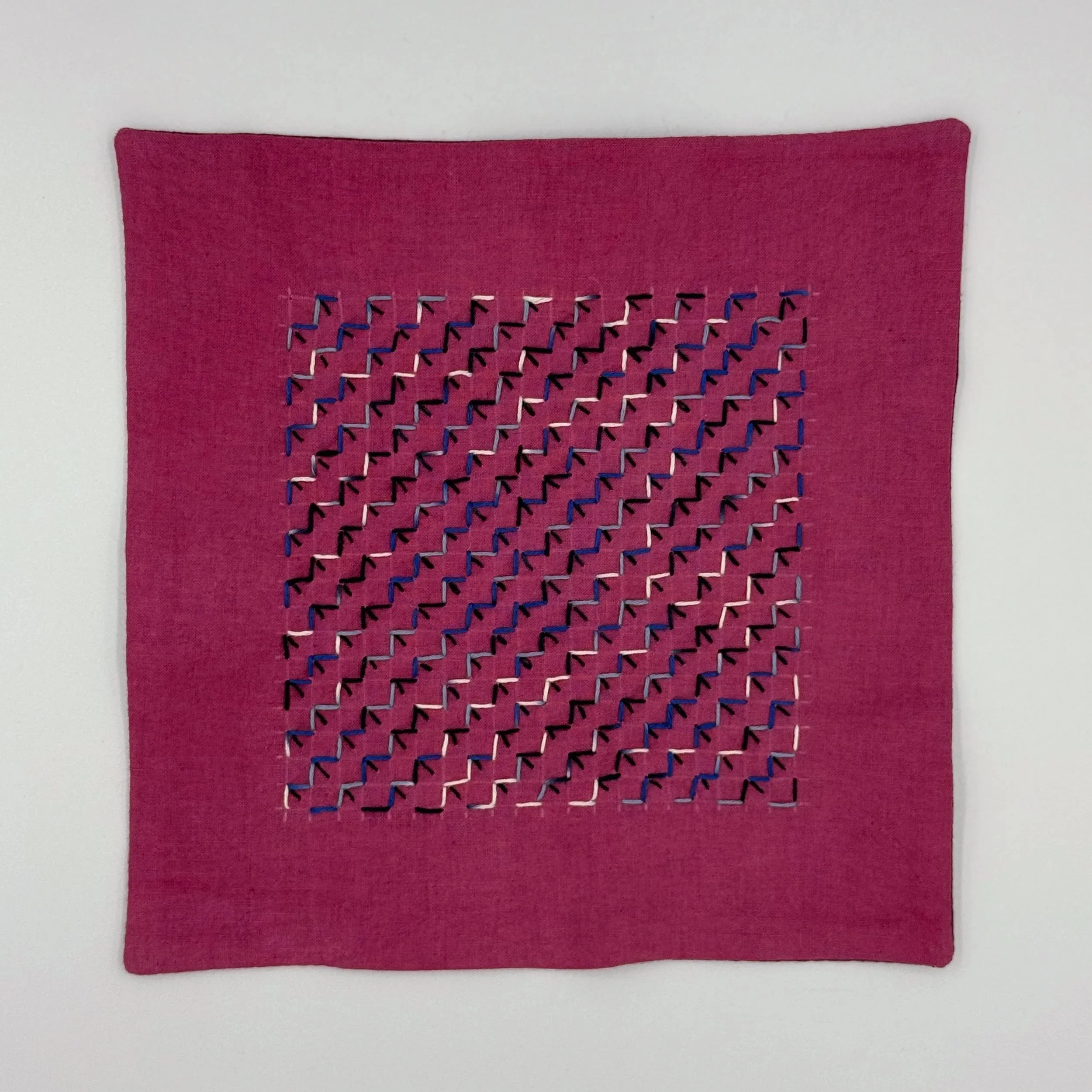
Front side Takenhanezashi
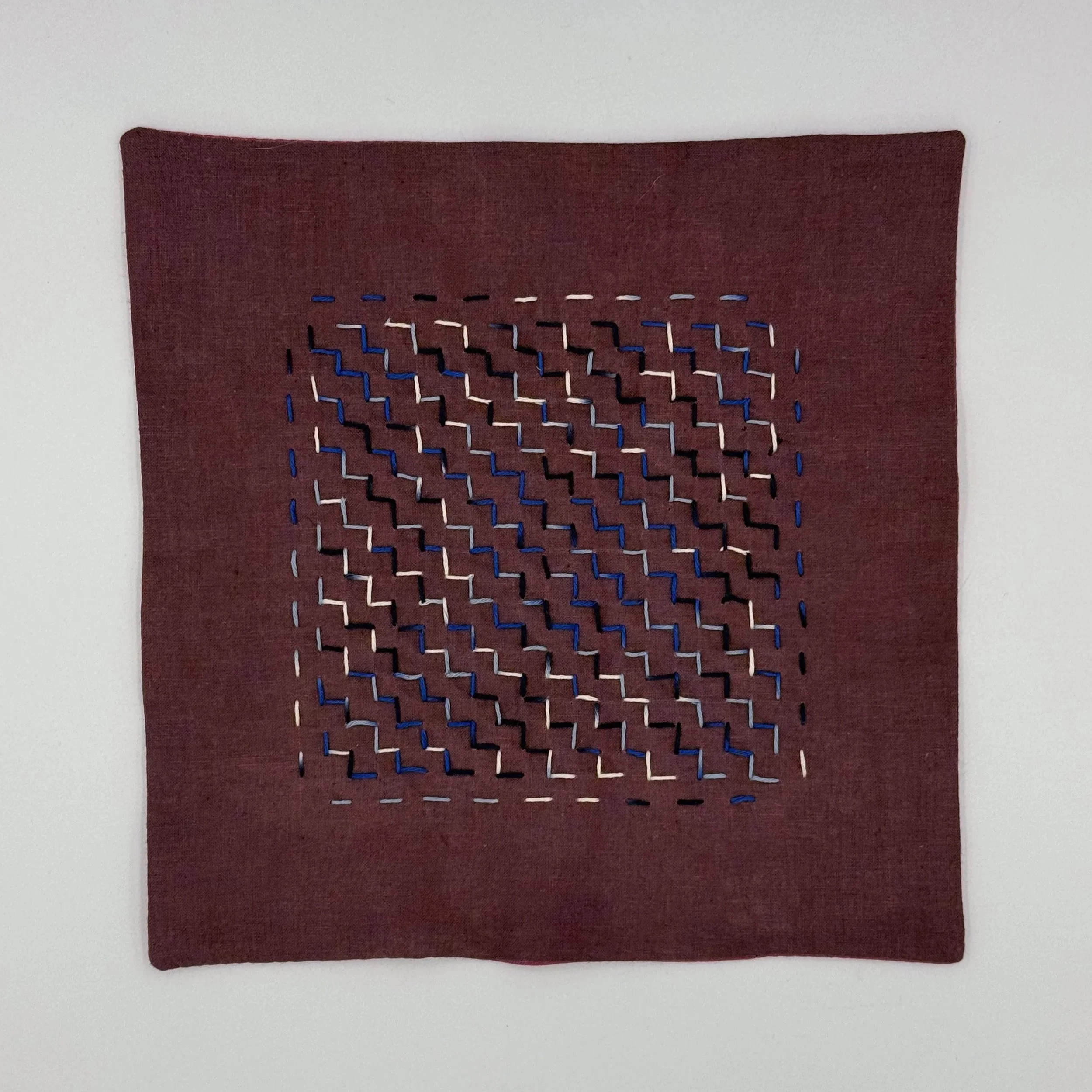
Back side Takenhanezashi