Sashiko - Zenizashi Stitch
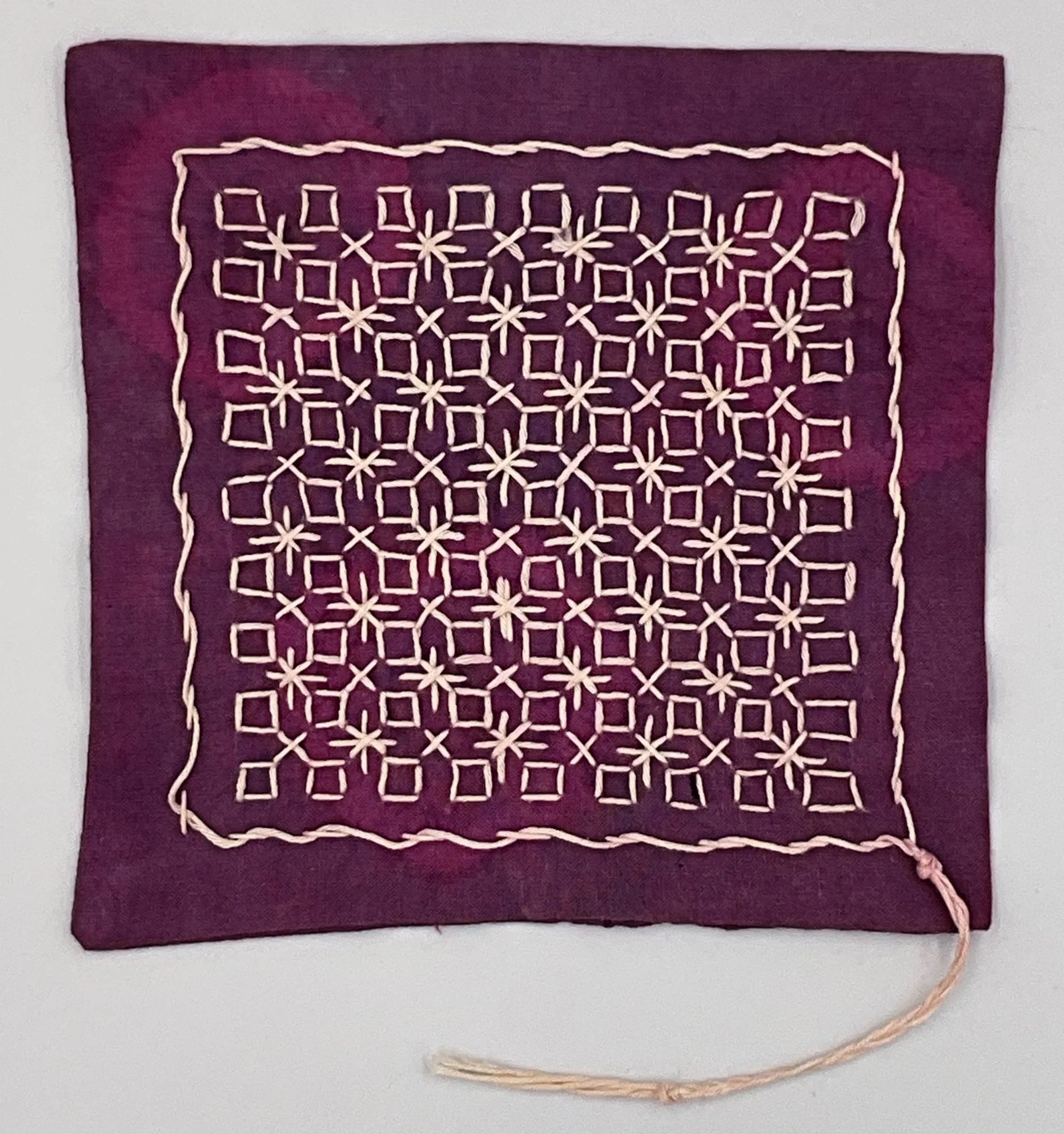
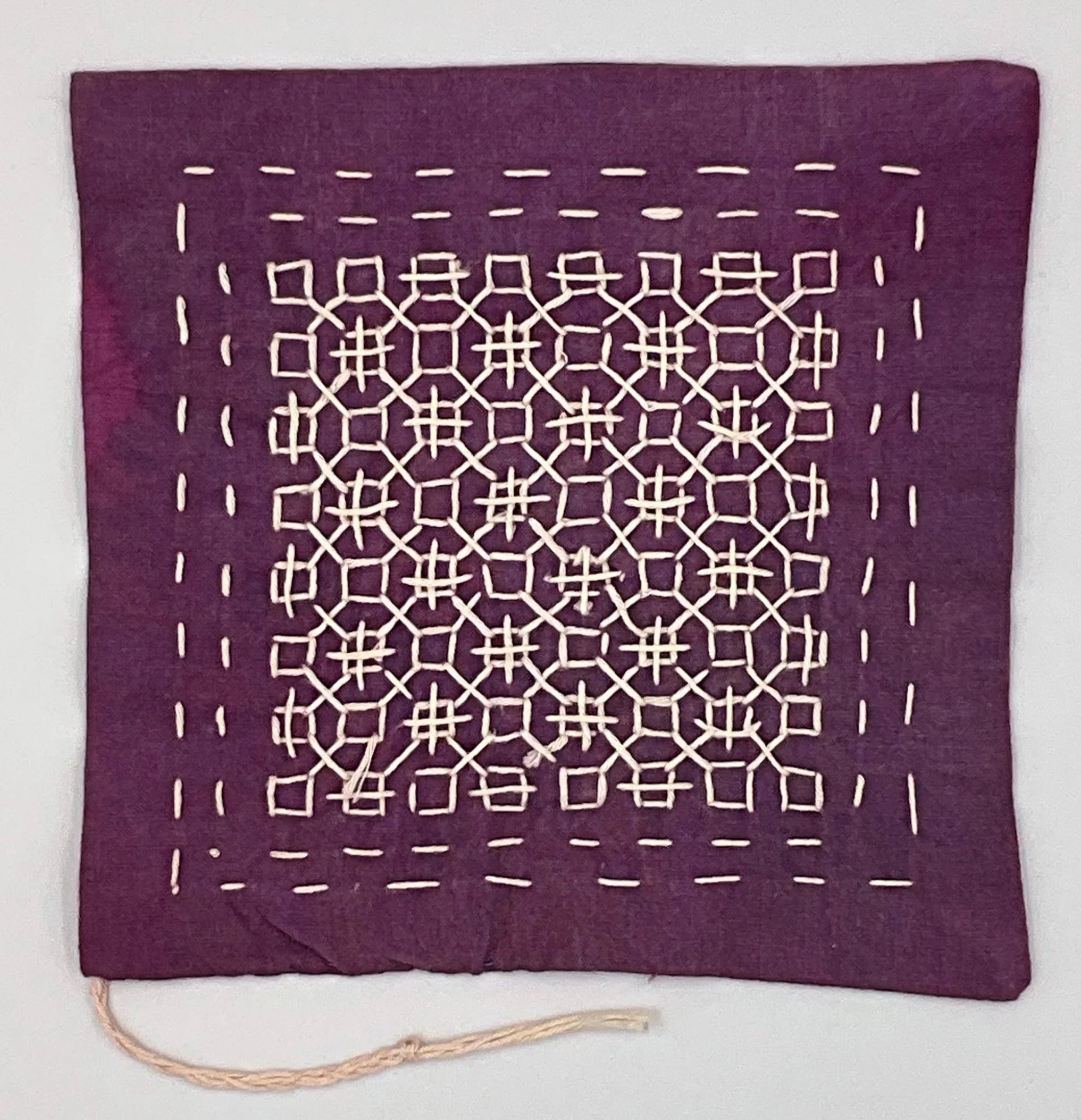
This was my first Sashiko Hana Fukin piece. I made this as part of a Sashiko stitching community challenge. The pattern is called Zenizashi. Zenisashi breaks down to ‘Zeni’ meaning money or coins, and ‘sashi’ meaning to string. This refers to the tradition of stringing coins together.
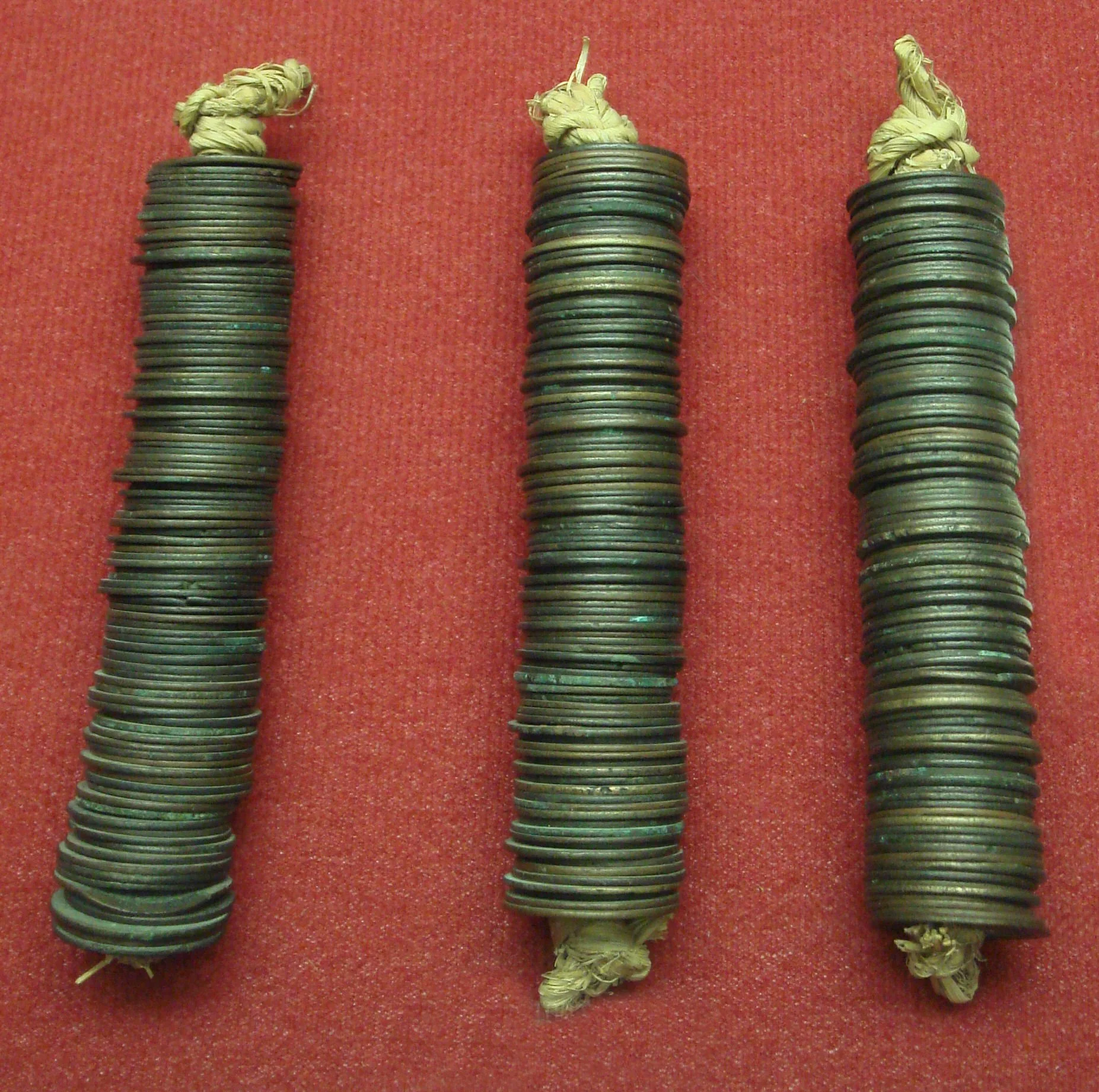
Image provided from Own work, photographed at Japan Currency Museum
Zeni is a round coin with a hole in the center, and thus this stitch is representative of prosperity. During the Edo period of Japan (1615-1868), it was common to string these coins (mon) for ease of carrying and counting in bundles of 100. The Japanese would also offer discounts when paying in bundles of mon, if a payment of 100 mon was due , 96 strung coins would be accepted as 100.
These strung coins were also used as good luck charms, the square of the hold representing Earth and the round coin itself representing sky. The mon coins were cast in copper or iron, and were eventually replaced by the yen.
For this piece, I used a cotton napkin that I dyed with Cochineal and then over dyed with Indigo. There is a slight pattern of resist circles on the fabric on one side that I created during the over dying. I used a simple white thread for the stitching to contrast the fabric.
It was a big learning project for me, but once I got into the movement it flowed quickly. I approached the project with a sense of Wabi-sabi, finding the beauty in the imperfections of your work. I didn’t focus on perfection, and stitches that looked too small or uneven began to become less noticeable once the pattern layers built. I definitely made some bigger mistakes that had to be mended later when noticed, but not holding onto the stress that comes with perfection made these learning moments and reminders to slow down.
One thing I did discover with this piece was color transference from the dye. Working with natural dye, your colors can definitely be generous when you rinse. The white threads picked up some of the cochineal color when I gave the piece a rinse at the end (most noticeable on the tail end of the border design. This was a Ah-ha moment, and I’ve now made sure to give my textiles a good rinse before sewing to try to get off as much of the dye as possible and avoid the transfer.