Teaching Engagement: Indigo Dip Day
A Day of Cloth, Community, and Indigo
I had the pleasure of teaching a hand-stitched Shibori workshop during the Sacramento Collective for the Textile Arts' fourth annual Indigo Dip Day at the Shepard Garden & Arts Center. Each year, this event brings together volunteers, artists, and curious newcomers to experience the magic of indigo dyeing in a welcoming community setting.
The vision for Indigo Dip Day began with LuAnne Hansen, SCTA's Book Arts Study Group Leader, who has cultivated an event that is as much about gathering people together as it is about making beautiful textiles. Throughout the day, multiple indigo vats were kept active while guests rotated through demonstrations and workshops, learning different approaches to preparing and dyeing cloth.
Like many successful events, most of the work happens long before the first guest arrives. The week before Indigo Day, our volunteer team gathered for a run-through and test dye session. We prepared the vats, tested our processes, organized materials, and made sure everything was ready so that the day itself could be focused on teaching, conversation, and creativity.
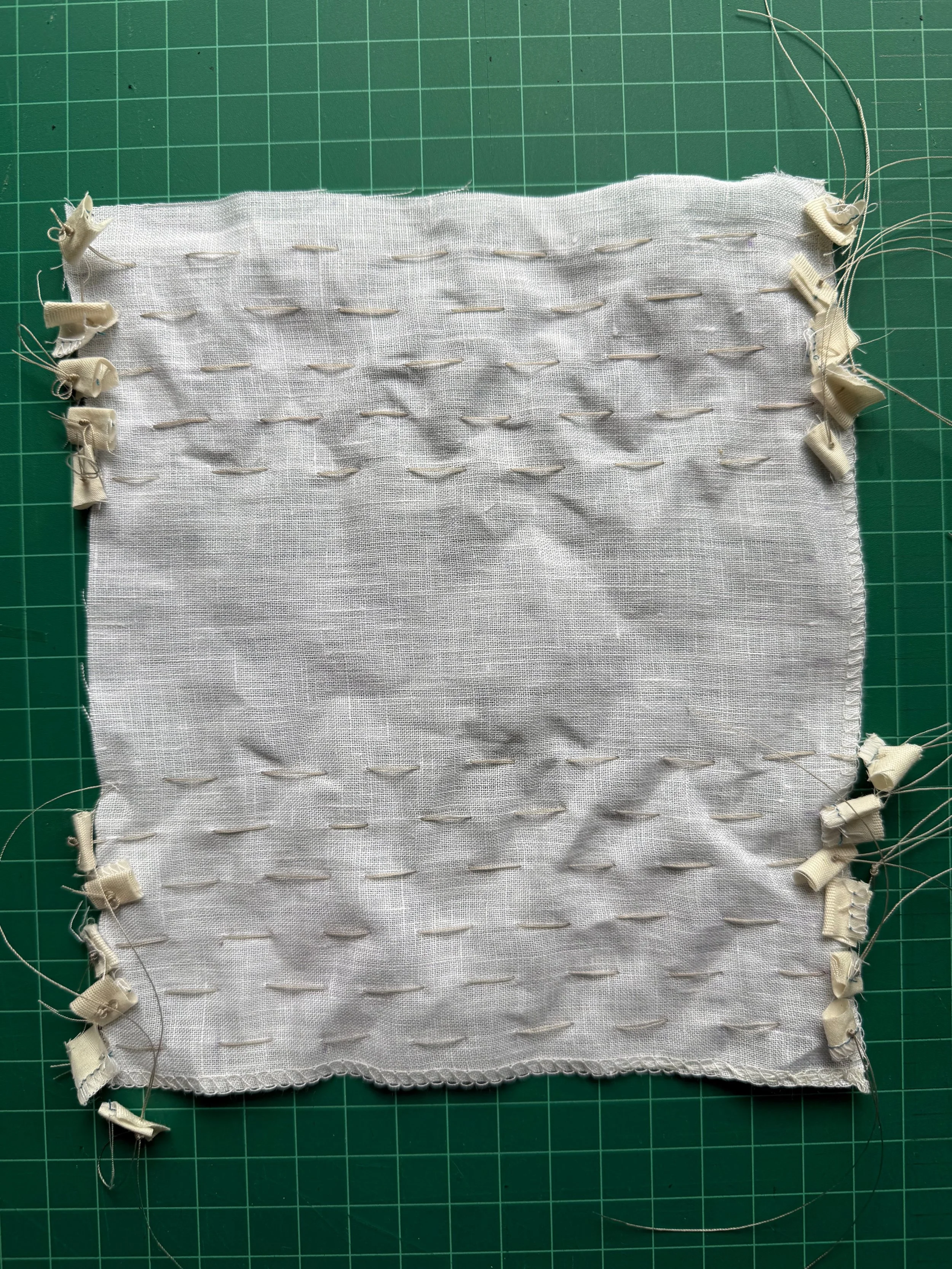
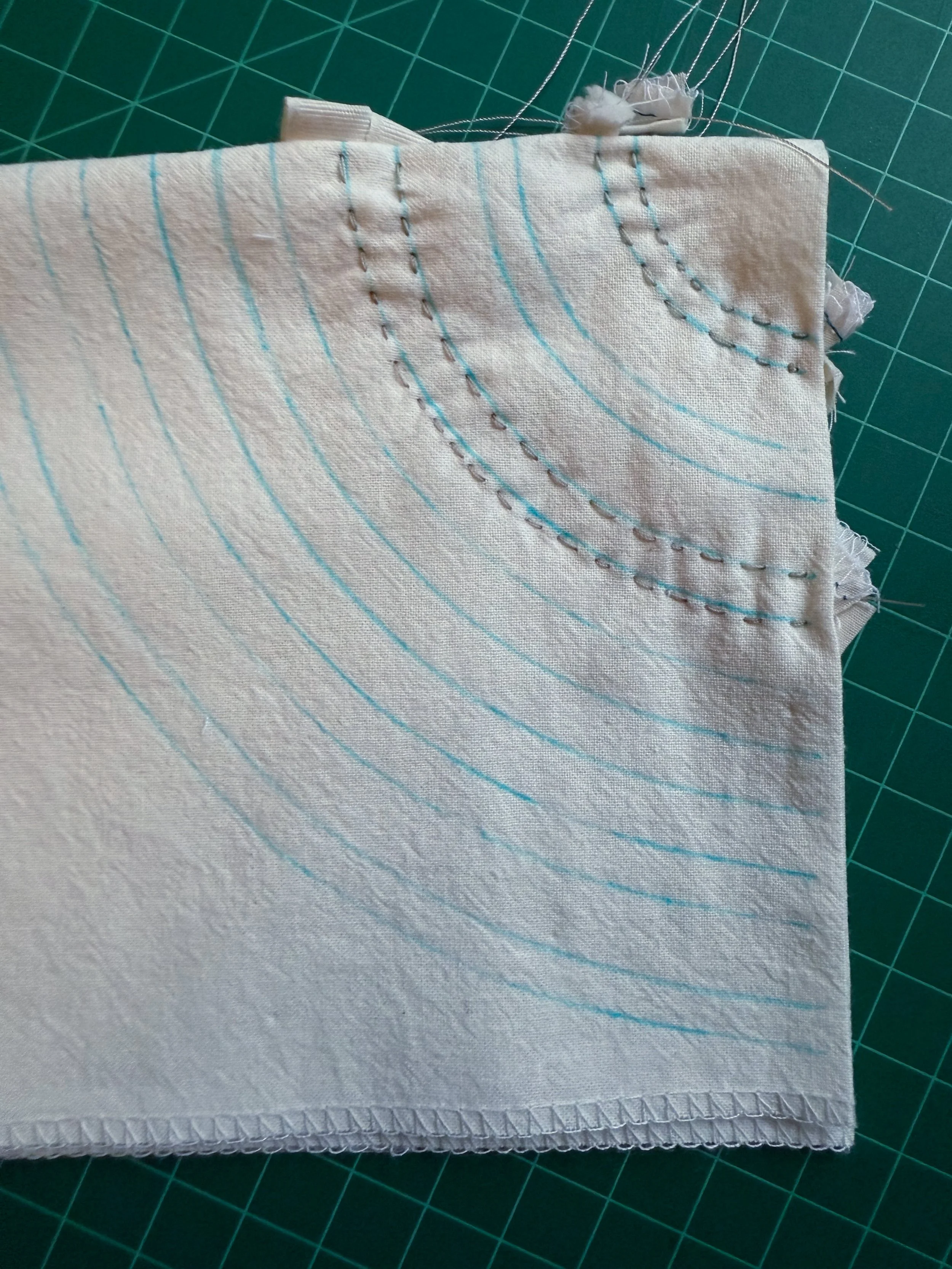
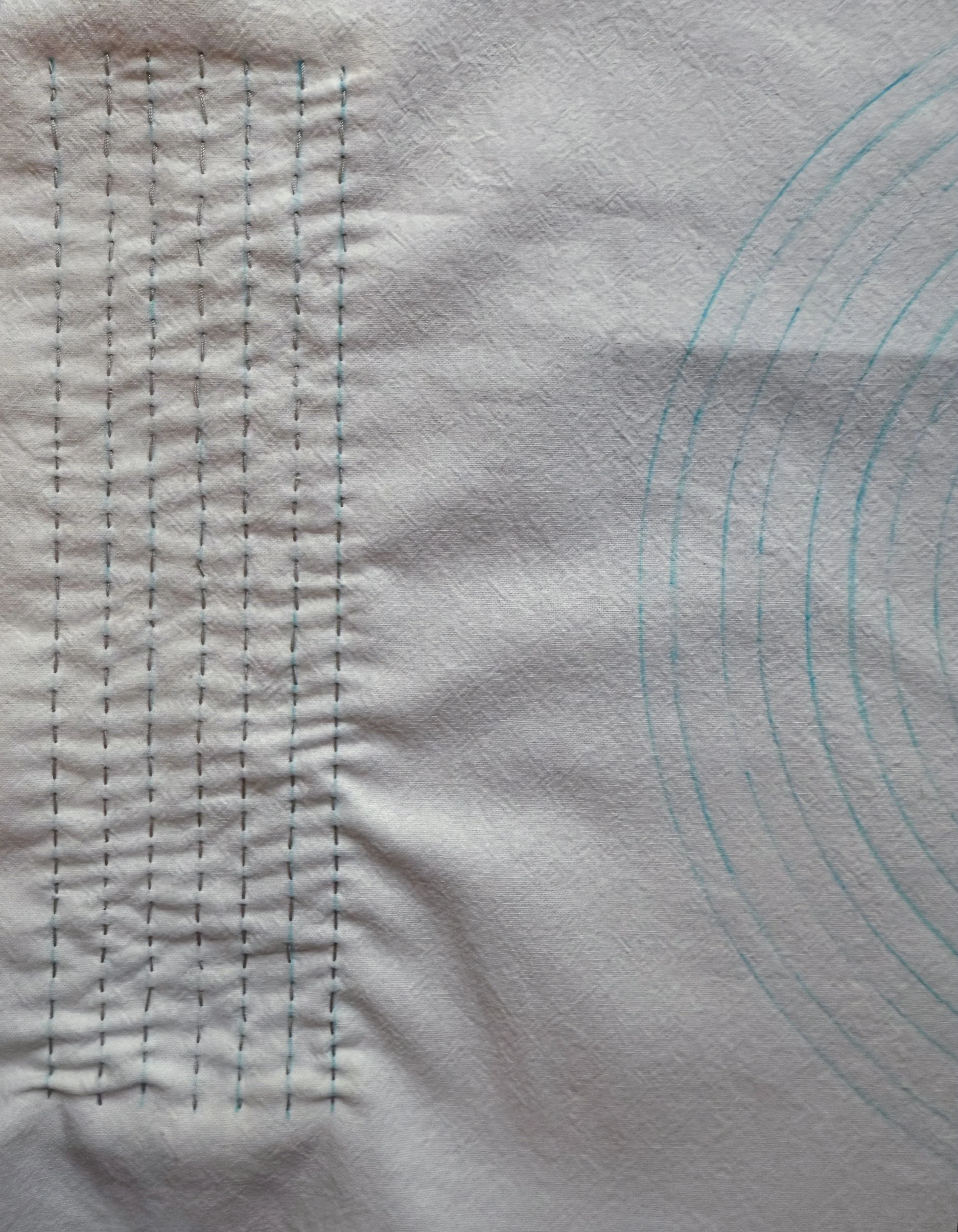
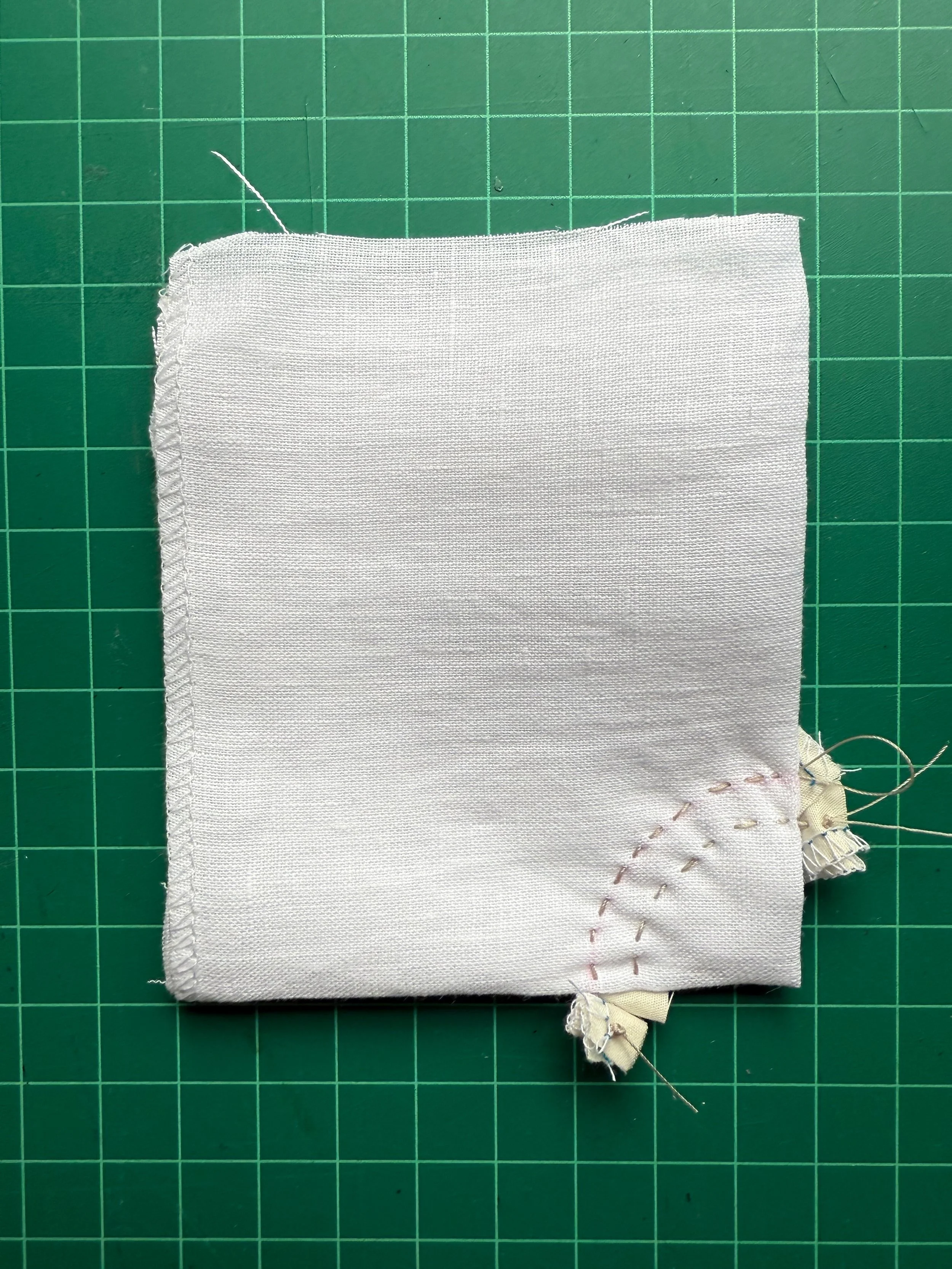
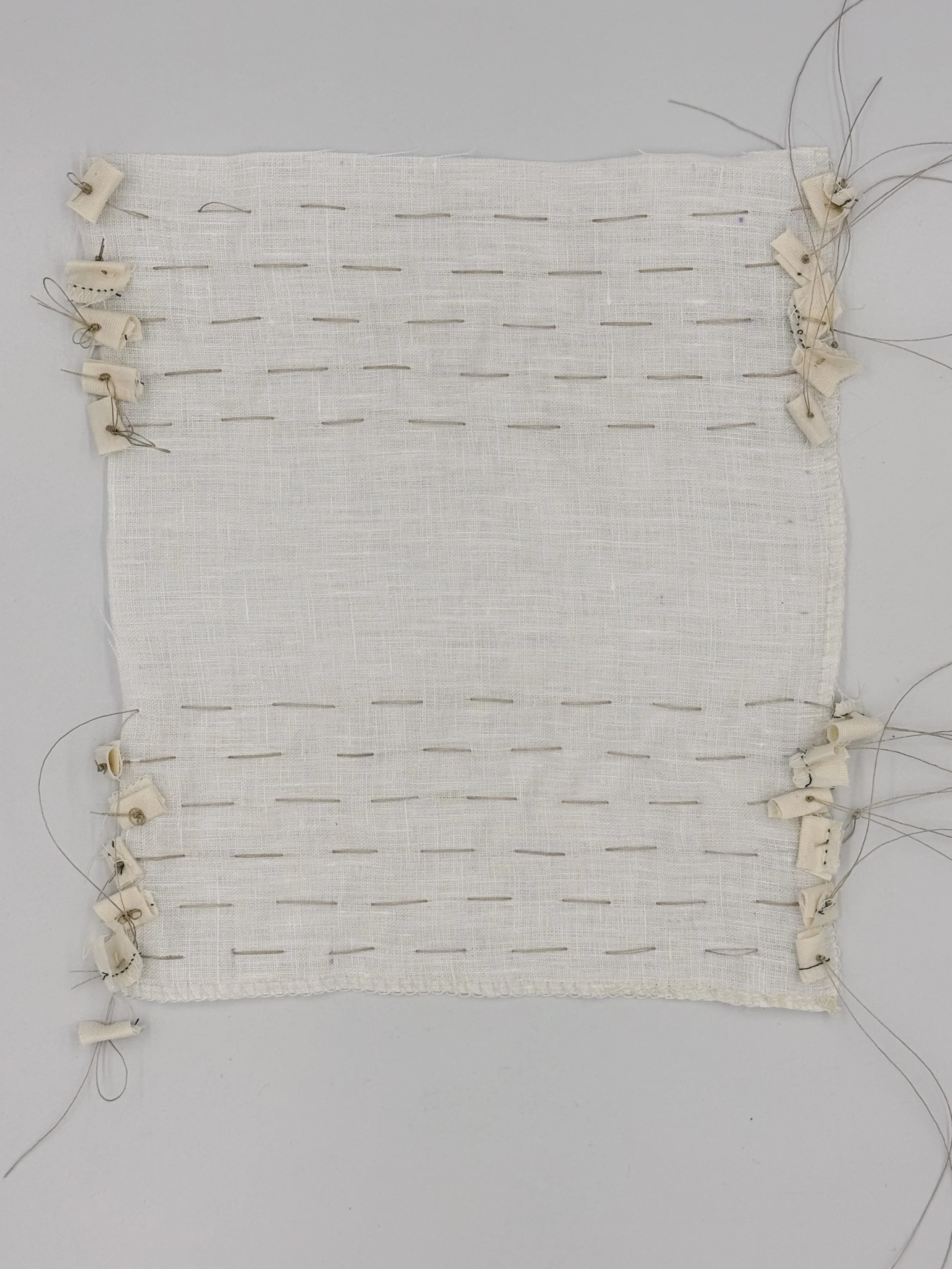
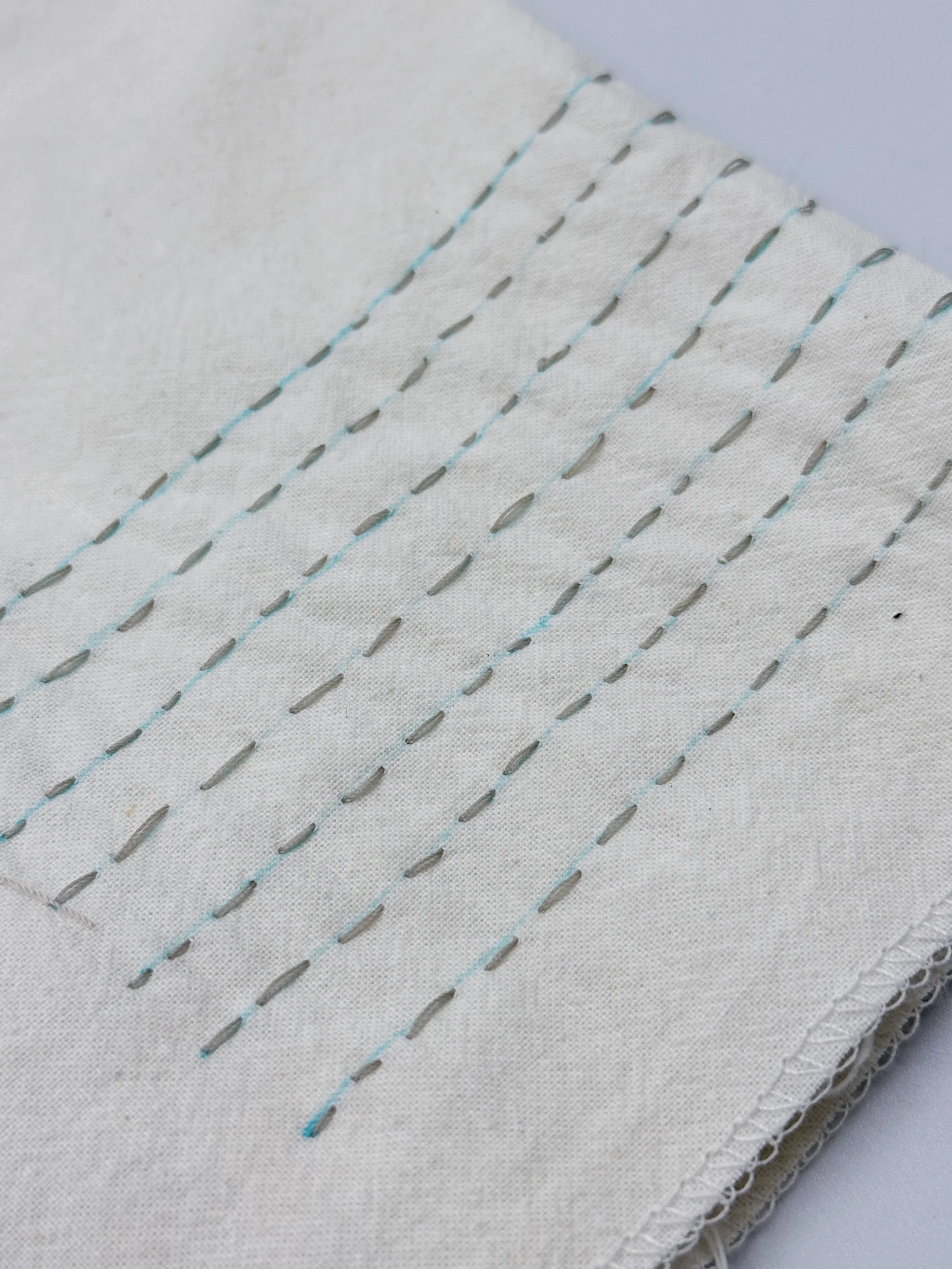
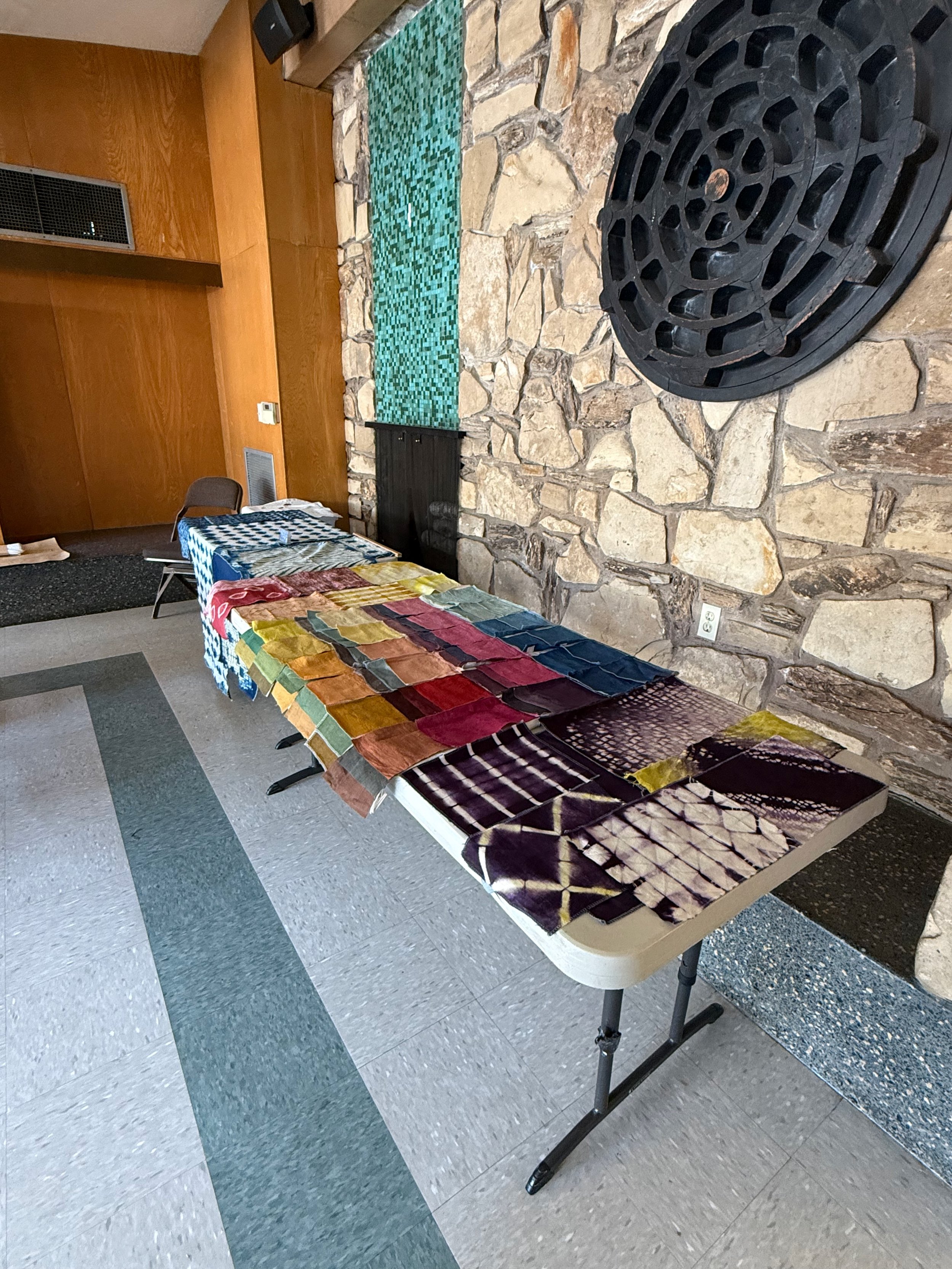
This Indigo Day was a little unusual for me. For perhaps the first time at an indigo event, I did not dye anything myself. Instead, I spent my preparation time stitching demonstration samples for the techniques I would be teaching and dyed a handful of test pieces in my studio several weeks beforehand using a small indigo vat. Having already satisfied my own curiosity, I found myself completely present during the event and focused on helping others discover the excitement of watching their stitched cloth emerge from the vat.
While LuAnne and her team guided visitors through Itajime Shibori, I spent the day teaching hand-stitched resist techniques. Itajime is one of the most approachable forms of shibori. By folding cloth and compressing it between shaped blocks before dyeing, participants can quickly create beautifully geometric patterns. It's a wonderfully freeing technique because it is a quicker preparation before the fabric is ready to enter the dye vat, making it an ideal introduction to the world of shibori.
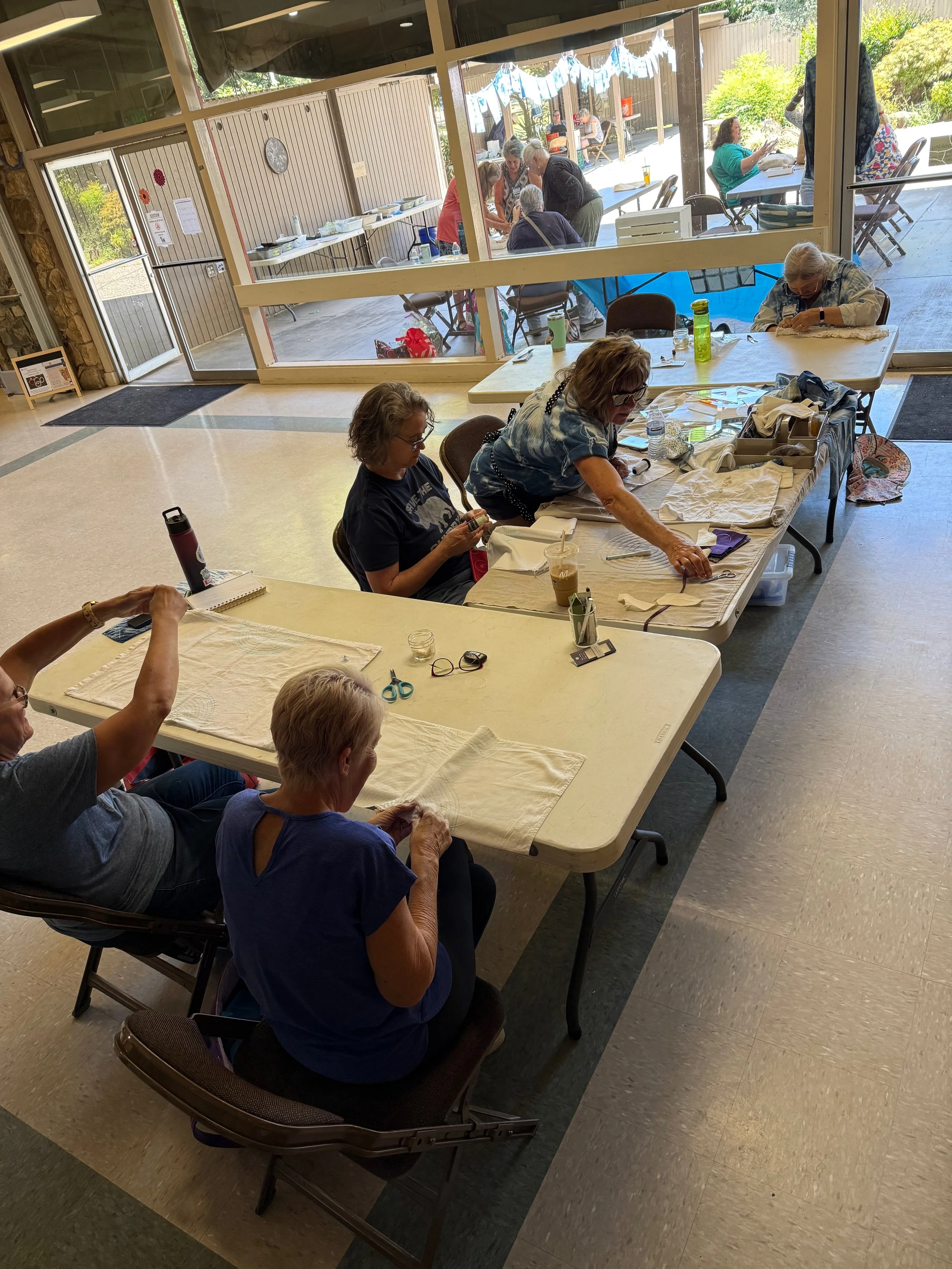
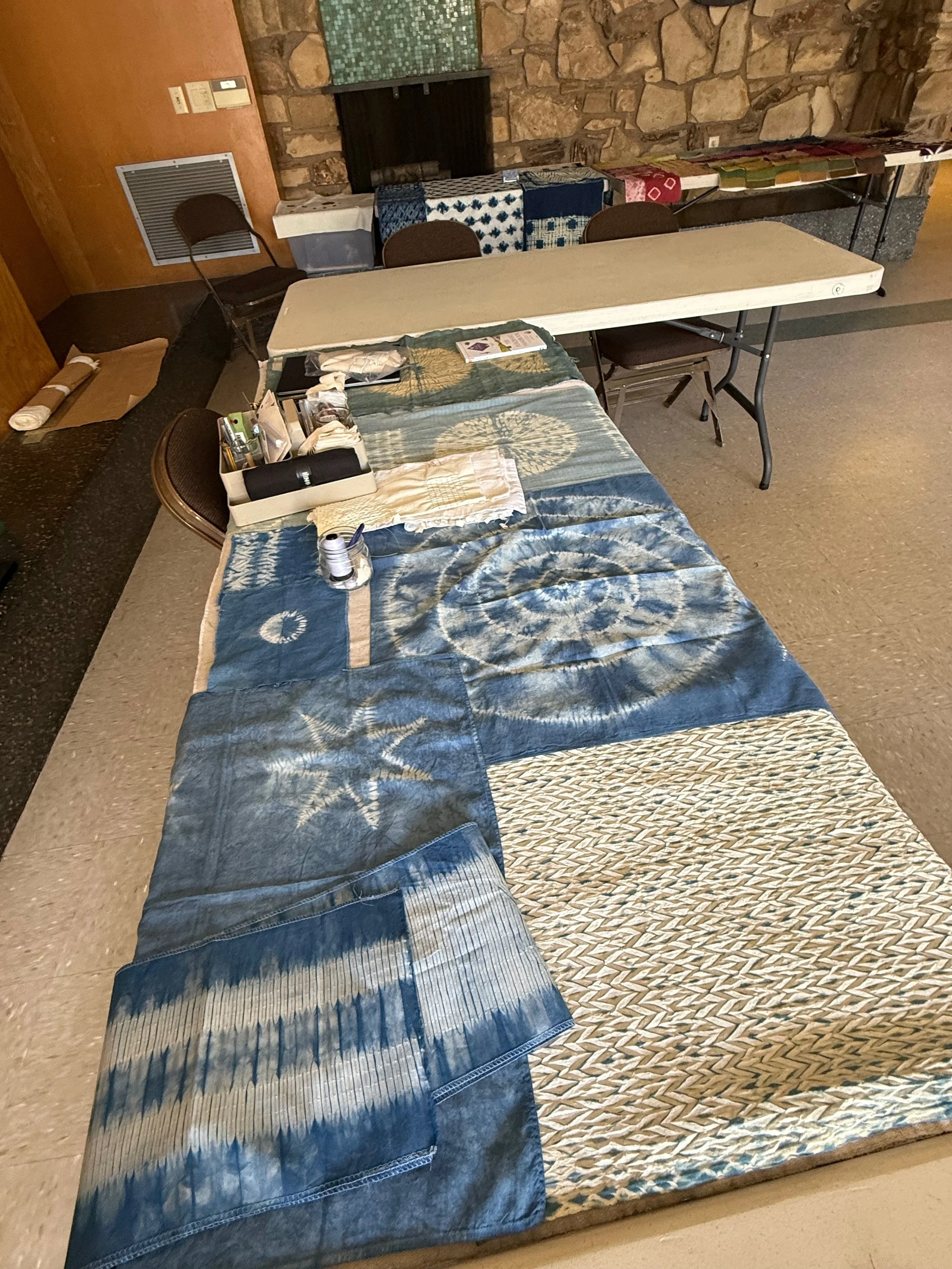
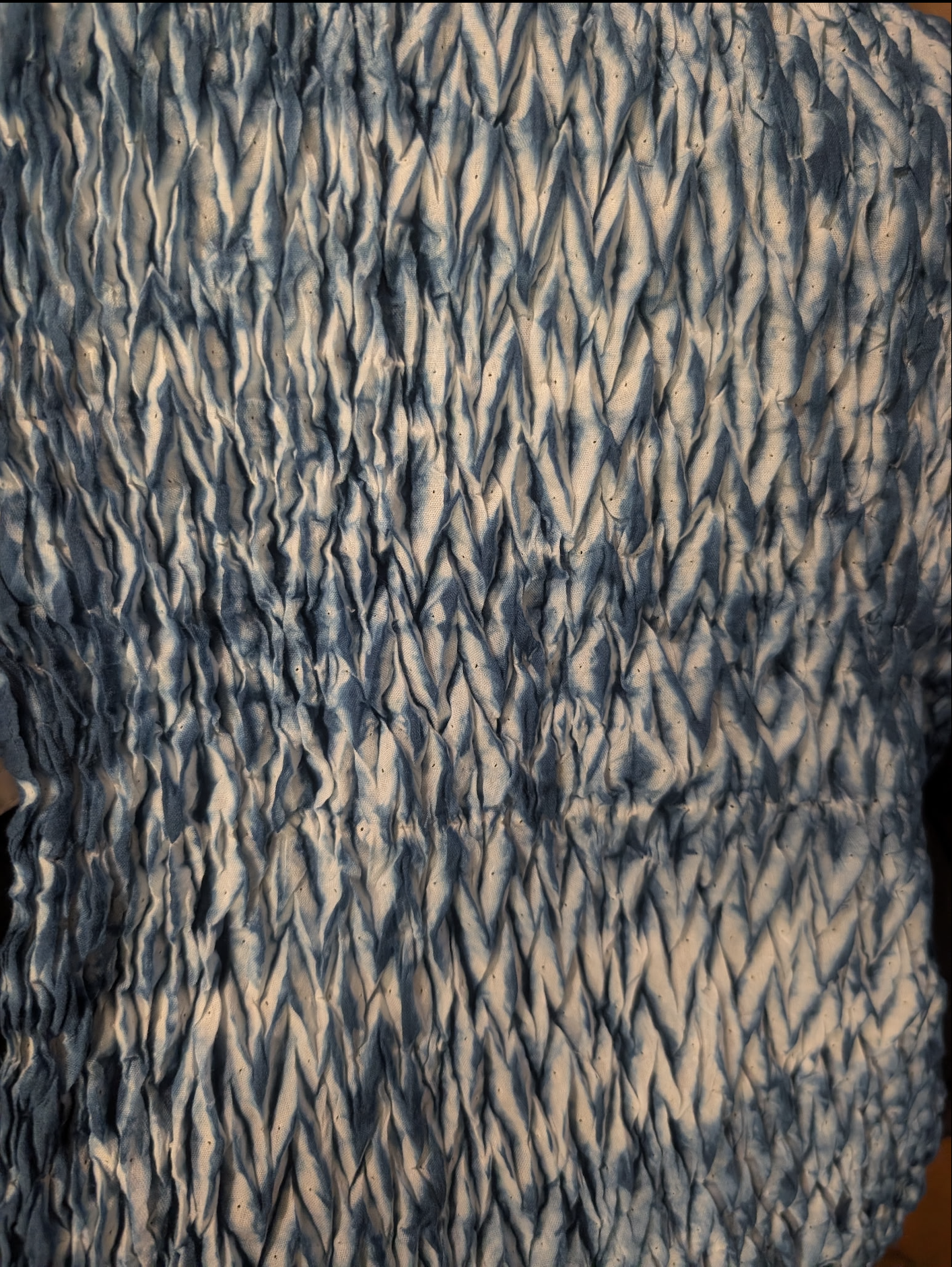
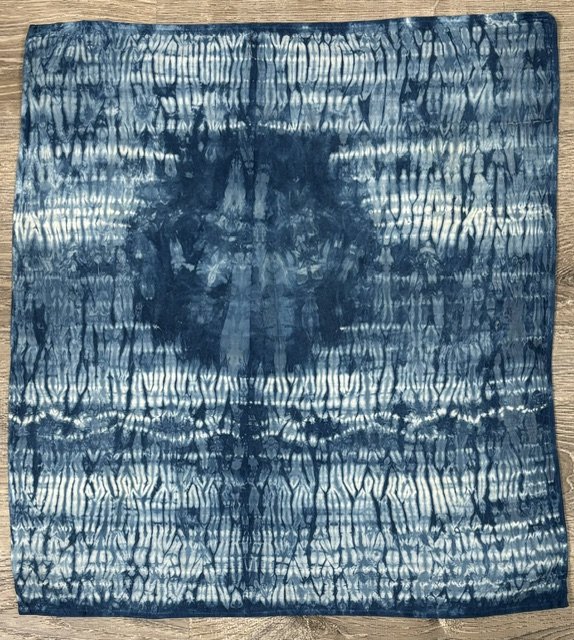
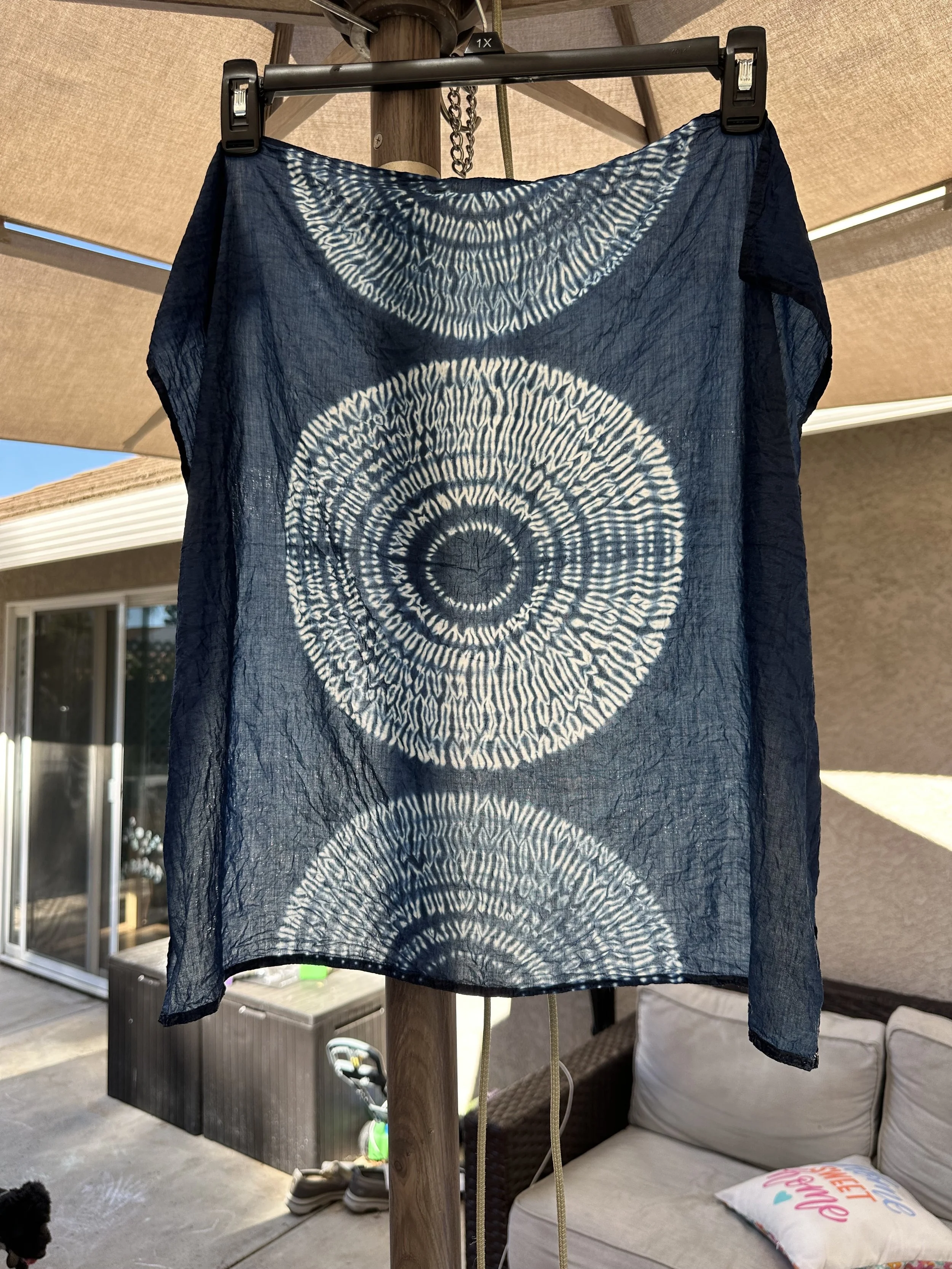
My workshop focused on a slower and more contemplative side of the tradition. Throughout the day I had the opportunity to work with eight students, helping each of them develop a design, mark their fabric, and begin stitching their own resist patterns. We explored several traditional techniques including Karamatsu, which creates radiating circular forms; Mokume, stitched parallel rows that resemble flowing wood grain; and Ori-Nui, curved stitched lines that produce beautiful undulating movement across the cloth. On average, each student spent 2 to 3 hours between their stitching and the Indigo dyeing.
One of the things I enjoy most about teaching stitched shibori is that every piece begins with the same simple materials (a needle, thread, and cloth) but no two artwork are ever alike.
Two of my students had volunteered during our preparation, giving them the opportunity to begin stitching more ambitious designs before Indigo Day. Seeing those projects develop was especially rewarding.
I was particularly impressed by Genevieve Rasmussen's Kawari Mokume piece. Although the finished pattern appears elegantly simple, it requires an incredible amount of patience, with nearly the entire textile covered in carefully placed stitches. It is one of my favorite shibori techniques precisely because of that quiet commitment the finished cloth carries the memory of every stitch that came before it.
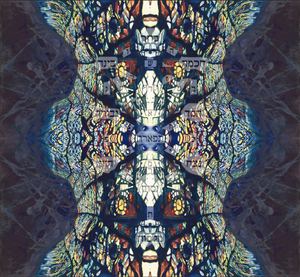
Another piece that captured my attention was created by Ellen Weinstein. Ellen, who always seems to have needle and thread in hand, shows her love of stitching in everything she makes. Rather than approaching her piece with strict symmetry, she embraced a layered, organic composition. The finished textile has remarkable energy and movement, with each stitched line contributing to a composition that feels both spontaneous and deeply considered.
As wonderful as the finished textiles were, my favorite part of the day wasn't watching the cloth come out of the vat (which I hardly saw), it was sitting together in community. We spent hours sewing, talking about fabrics, sharing travel stories, exchanging techniques, answering questions, and simply enjoying the company of others who appreciate the slow satisfaction of making something by hand. Those conversations, as much as the dye itself, are what make events like Indigo Dip Day so meaningful.
Indigo has an interesting way of bringing people together. Whether someone arrived with years of textile experience or had never held a needle before, everyone left with something uniquely their own, and with the confidence to continue exploring.
On a personal note, this year's Indigo Dip Day also marked the conclusion of my term as Vice President of SCTA. Looking back, I'm proud of what we accomplished together over the past year and grateful for the friendships and community I've found through the organization. While I'm stepping away from board leadership, I'm excited to continue participating as an instructor and member. More than anything, I'm looking forward to returning to the study groups—not as an organizer, but simply as another maker around the table.
Sometimes that's exactly where the best conversations begin.