Soya as a Primer
The year long Printing & Painting On Textiles course that I’m taking from Plants & Colour has kicked off with a session dedicated to using Soya. I am familiar with Soya from a few of the workshops that I took in Japan, but this is a great push to adapt this into my general process.
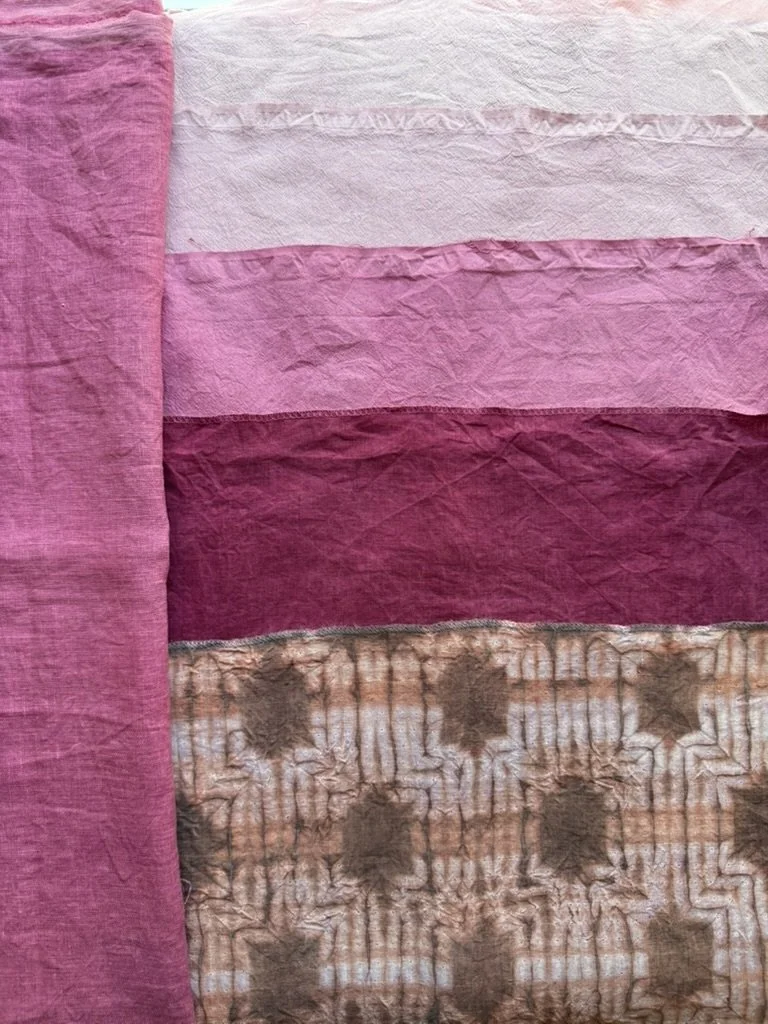
Cochineal Color Study
Image shows on the left side linen dyed with cochineal 15% WOF without soya (Multiple extraction method, treated with tannin and alum before dyeing). From top to bottom on the right side; Cotton dyed with cochineal EXTRACT at 2% WOF without soya (not my favorite dye material- added to the dyepot in powder form, fabric treated with tannin and alum before dyeing), Cotton dyed with cochineal 10% WOF without soya (1extraction method, treated with tannin and alum before dyeing), cotton dyed with cochineal 15% WOF without soya (Multiple extraction method, treated with tannin and alum before dyeing), linen dyed with cochineal 15% WOF WITH soya (Multiple extraction method, treated with alum before dyeing), linen shibori dyed with cochineal 15% WOF WITH soya (Multiple extraction method, 1 pot acid dye).
In order to use the Soya as a primer, I learned how to make fresh soy milk from soy beans. After that, I applied the liquid prepared to my scoured cellulose fabrics in a multiple layered application. After the piece dry on the line, they have to cure for 2 weeks before I can work on the color.
The Soya changes the molecular binding properties of the cellulose fibers to behave like a protein. This means that you could technically dye the pieces without the addition of Tannin (which is necessary for cellulose dyeing). For a deep drive into this, check out the work of Natalie Stopka who was our instructor for this segment. She has done extensive research, and teaches this process. She’s also a phenomenal artist, worth a follow.
This segment is also reviewing a process of dyeing called Acid Dye Pot. It uses a citric acid powder instead of an Alum to set the color. There is some benefit to this as it removes the metallic salts from the fabric, but the end color is drastically different from that I expected when I tested it with Cochineal.
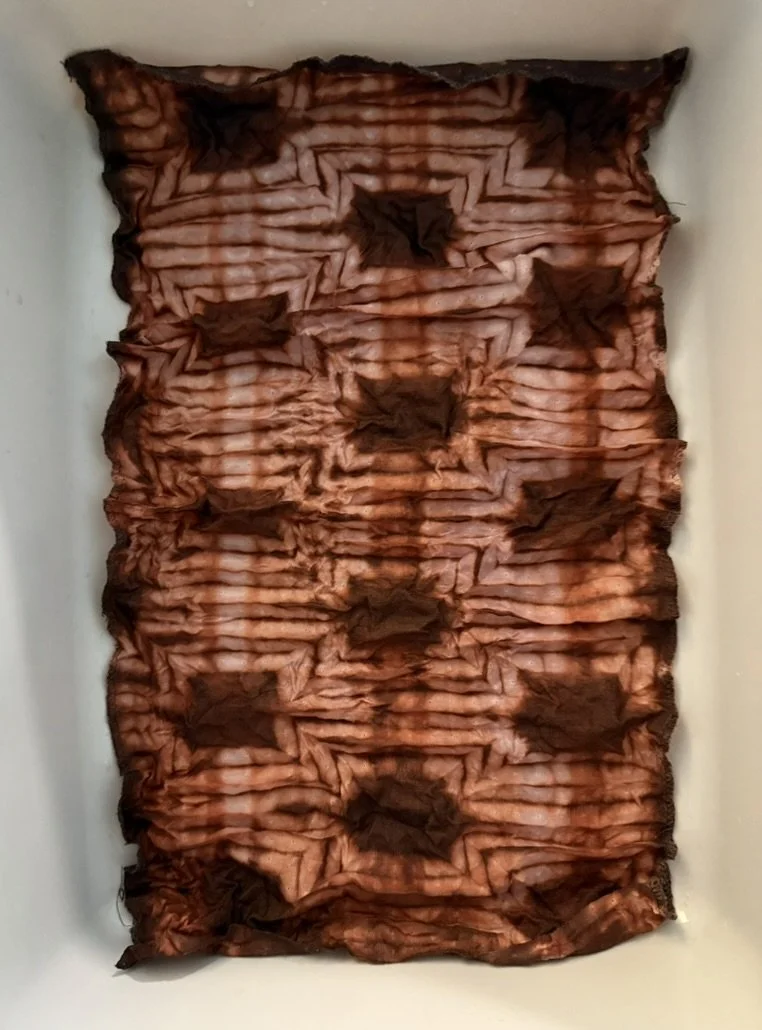
Acid Dye Pot
5 extractions of cochineal (2,037ml of dye over the extraction process, just over 2 quarts). I topped this off with 16 oz of water to get to 3 quarts of liquid in my depot. I added 10% gallnut tannin, heated for 10 minutes. PH readying was 6 at this point. I then added 10% citric acid, heated for 10 minutes, ph read at 3/4. When I added the Citric acid, the dye noticeably shifted color, it brightened/lighened. I then added the prewet fabric, temperature was 85C at the time. I used a piece of linen I had done shibori stitching on. I know what color this linen type normally hits without the soya process. I held round 90C for an hour with occasional stirring, and then let the pot cool for an hour before removing the fabric. I ended up with a very deep red, not the pink I usually see with cochineal on this ground when I tannin and mordant without soya. It's still pretty and strong color, but has a darker hue.
After testing the Acid dye pot, I went ahead and went back to my normal methods using Alum instead of the citric acid.
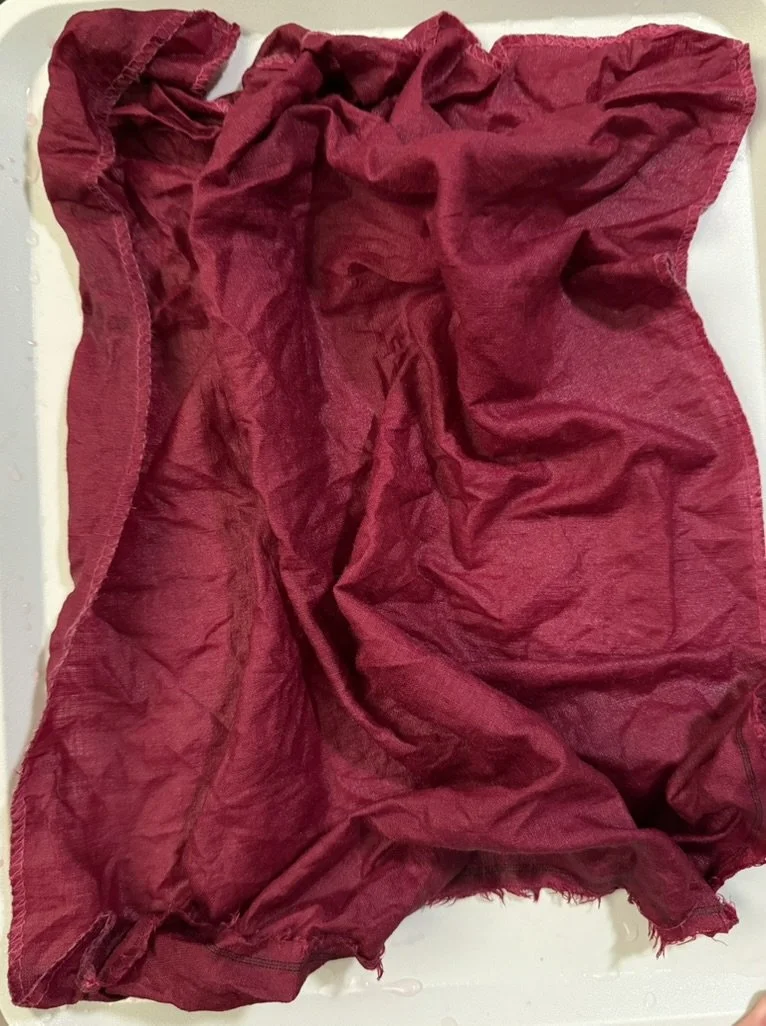
Solid Linen Dye Test
I tested a linen piece treated with Soya, then dyed with cochineal, not using the acid pot method. I used 15% alum and then 15% WOF cochineal, 5 extractions. Results were drastically different, as the non acid dyed linen is closer to what I anticipate with Cochineal. But it is still much more red rather than the pink I usually get.
I read in The Art and Craft of Natural Dyeing, the Cochineal Scarlet Red recipes they add cream of tartar or tartaric acid to get a more red color, and in their Cochineal Pink recipe they only use the cochineal. 'Like madder, cochineal is polychromic, producing many colors and shades that vary with different mordants combinations, and the PH of the dye bath.'
This all makes sense, and also was a concern when I decided to try to acid pot method because of the PH shift. The moment the citric acid was added to the pot, the dye bath lightened in color- it was a noticeable change. I wasn't expecting the more muted red color on the shibori piece, so I'm glad I ran another test without the citric acid and arrived at the brighter more Scarlett red. Now it makes me wonder what the soya is doing to the ph balance of the fabric during the treatment.
I’m definitely intrigued about the possibilities here, excited to keep exploring!